
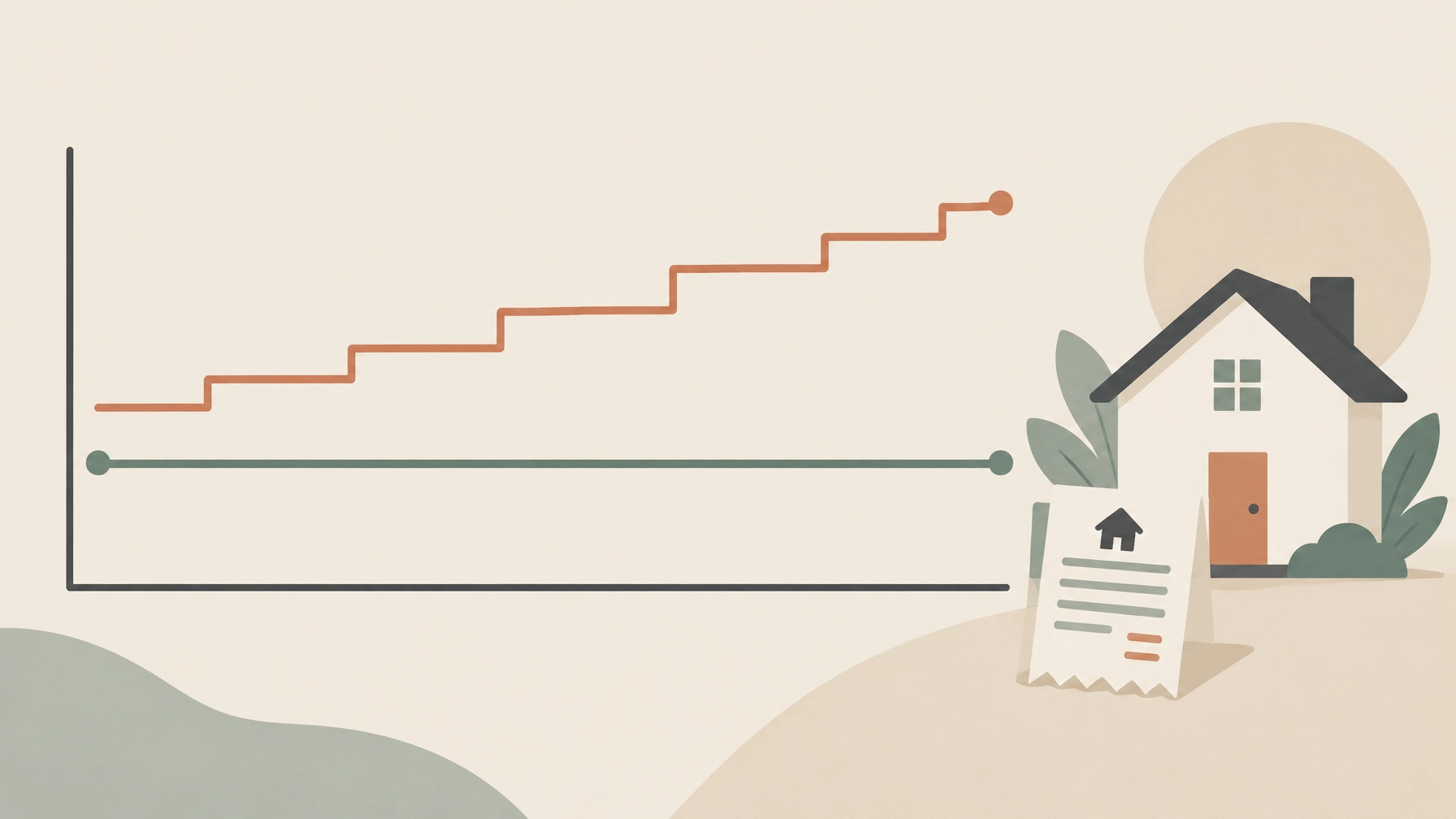
Your mortgage rate can stay exactly the same while your total monthly payment rises by $100, $200, or more.
That is not a contradiction. It means the escrow portion of your payment changed.
Escrow typically covers property taxes and homeowners insurance. When either bill increases, your servicer must collect more each month going forward. If the account also came up short because last year’s bills were higher than expected, you may have to repay that shortage at the same time.
That creates a two-part increase:
- A higher ongoing escrow payment for the new tax and insurance amounts.
- A temporary shortage repayment spread across future monthly payments.
The result can feel like a second payment shock, even on a fixed-rate mortgage.
Use the calculator below to estimate the potential effect.
What Changed
Escrow is the account your mortgage servicer uses to pay certain housing-related bills on your behalf. Each month, part of your mortgage payment goes into that account. When a tax or insurance bill comes due, the servicer pays it from the balance.
Escrow commonly collects:
- County or municipal property taxes
- Homeowners insurance
- Flood insurance, when required
- Mortgage insurance, in some loan structures
- Certain HOA-related items where permitted and included in the loan servicing arrangement
Your total mortgage payment is often described as
PITI:
- Principal
- Interest
- Taxes
- Insurance
A fixed-rate mortgage fixes the principal-and-interest portion of the payment. It does not freeze the cost of owning the property.
Property taxes can change after a reassessment. Insurance premiums can change at renewal. Flood insurance may change based on risk, coverage, or program pricing. Those changes can alter the escrow portion of your payment.
As of the week ending September 24, 2026, the average 30-year fixed mortgage rate was 7.03%, according to Freddie Mac’s Primary Mortgage Market Survey. The rate environment makes payment planning important, but the same principle applies to homeowners who already locked in a rate years ago: a fixed rate is not the same as a fixed total payment.
Recent CNBC Real Estate reporting has highlighted the growing number of homeowners dealing with escrow shortages as insurance and property tax bills outpace earlier projections.
In Georgia, homeowners insurance premiums are projected to rise roughly 10% in 2026 after increasing about 9% in 2025. When those increases occur alongside property tax reassessments, average escrow shortages have run around $2,157. In Florida, some insurers have filed for rate decreases and average premiums have begun easing in many counties, but many homeowners are still paying for the effects of earlier increases.
Why It Matters
A shortage happens when your servicer projected lower taxes or insurance than the amount ultimately billed.
For example, suppose your servicer estimated:
- Annual property taxes: $4,800
- Annual homeowners insurance: $2,400
- Total projected escrow bills: $7,200
But the actual bills were:
- Annual property taxes: $5,400
- Annual homeowners insurance: $3,000
- Total actual escrow bills: $8,400
The account was short by $1,200. The servicer may have paid the bills as required, but the escrow balance now needs to be restored.
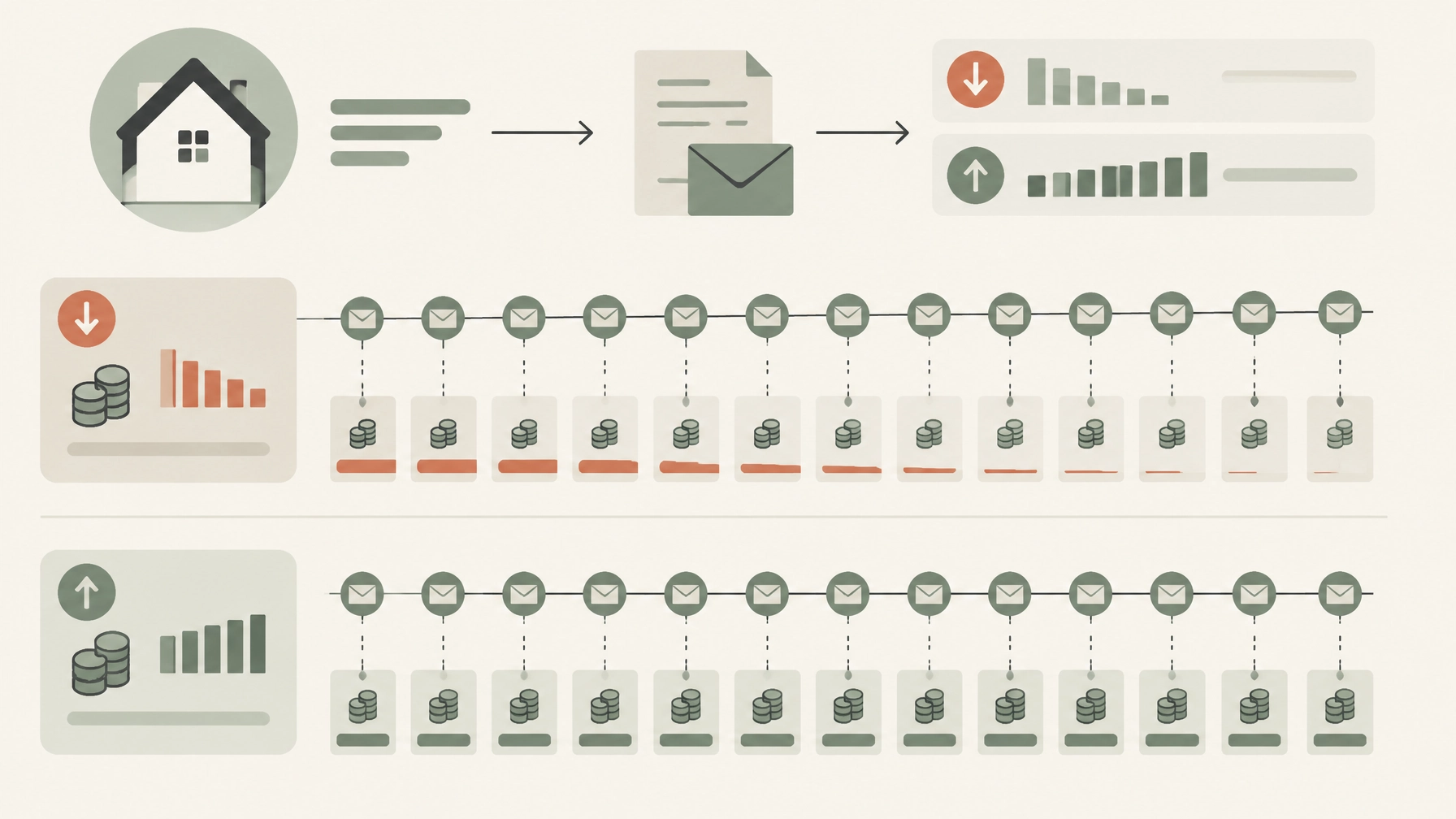
During the annual escrow analysis, the servicer generally does two things:
- Recalculates the monthly escrow deposit using the higher projected bills.
- Adds a repayment amount for the prior shortage.
Federal escrow rules require servicers to conduct an annual analysis. When a shortage is collected through monthly payments, repayment is generally spread over at least 12 months. A homeowner may also be able to make a voluntary lump-sum payment, although the exact treatment depends on the shortage size, servicer procedures, and federal escrow rules. The Consumer Financial Protection Bureau’s mortgage servicing guidance explains the distinction.
This is the part many homeowners miss: the shortage repayment is not the same thing as the new escrow requirement.
If your ongoing escrow rises by $100 per month and your $1,200 shortage is repaid over 12 months, your payment may rise by approximately $200 per month for the next year.
After the shortage is repaid, the temporary $100 repayment usually ends. The new ongoing escrow amount does not. It remains based on the higher tax and insurance projections.
Read your annual escrow analysis statement for:
- The prior escrow payment
- Actual taxes and insurance paid
- Projected taxes and insurance for the coming year
- The shortage or surplus amount
- The new monthly escrow requirement
- Any shortage repayment amount
- The date the new payment begins
If the statement is unclear, ask the servicer to separate the increase into two numbers: the permanent escrow adjustment and the temporary shortage repayment.
Example Scenario
The following example is an illustration, not a prediction of any specific homeowner’s payment.
The Hollis family in the metro Atlanta area has a fixed-rate mortgage at 6.5%. Their principal-and-interest payment remains unchanged.
Before the annual escrow analysis, their payment looked like this:
- Principal and interest: $2,100 per month
- Property tax escrow: $400 per month
- Homeowners insurance escrow: $200 per month
- Total escrow: $600 per month
- Total mortgage payment: $2,700 per month
During the year, the county reassessed the property and the insurance policy renewed at a higher premium.
Their prior annual escrow projections were:
- Property taxes: $4,800
- Homeowners insurance: $2,400
- Total projected bills: $7,200
The actual bills were:
- Property taxes: $5,400
- Homeowners insurance: $3,000
- Total actual bills: $8,400
That created a prior-year escrow shortage of $1,200.
The new ongoing escrow requirement is:
- New annual property taxes: $5,400 ÷ 12 = $450 per month
- New annual insurance: $3,000 ÷ 12 = $250 per month
- New ongoing escrow: $700 per month
Their ongoing escrow rises from $600 to $700, a permanent increase of $100 per month.
The $1,200 shortage is then spread over 12 months:
- $1,200 ÷ 12 = $100 per month
For the next year, the payment becomes:
- Principal and interest: $2,100
- New ongoing escrow: $700
- Shortage repayment: $100
- New total monthly payment: $2,900
The payment increased by $200 per month, even though the 6.5% interest rate never changed.
After 12 months, assuming no additional tax or insurance changes, the $100 shortage repayment may fall away. The payment would then be approximately $2,800, reflecting the higher ongoing escrow.
Tips
Use these steps to reduce surprises and respond when your escrow changes.
- Read the annual escrow analysis instead of assuming the increase is a rate change.
- Find the lines for taxes, insurance, shortage, and new monthly escrow. The statement should show what changed.
- Compare the projected tax figure with the actual tax bill.
- Pull the county tax bill or tax account record. Compare the amount paid with the amount the servicer expected to pay.
- Shop homeowners insurance 45 to 60 days before renewal.
- That gives you time to compare carriers, review deductibles, verify replacement-cost coverage, and provide the new declarations page to the servicer.
- Ask whether a voluntary lump-sum shortage payment is available.
- Paying the shortage upfront may reduce the temporary monthly increase, but keep enough cash available for emergencies, repairs, and reserves. Ask the servicer how the payment will be applied before sending funds.
- Appeal a property tax assessment when comparable evidence supports it.
- Review the assessment, gather comparable sales or property details, and follow your county’s appeal process. If the appeal succeeds, the lower tax bill can reduce future escrow requirements. It may not immediately reverse a shortage that has already been calculated.
- Understand that changing insurance carriers mid-year can trigger a new analysis.
- The servicer needs the new premium, policy dates, and coverage information. A mid-year change can create timing differences between the old and new policies.
- Keep a small escrow cushion in your household budget.
- Even if the servicer maintains the permitted cushion, your personal budget should allow for tax reassessments, insurance renewals, and one-time repairs.
- Keep escrow documents organized.
- Save the annual analysis, tax bills, insurance declarations pages, renewal notices, appeal records, and payment confirmations in one folder.
- Separate the permanent increase from the temporary repayment.
- Ask the servicer to explain how much comes from higher ongoing bills and how much comes from shortage recovery. That distinction helps you plan the next 12 months.
- If you are buying, budget for escrow growth from day one.
- The payment shown at closing may reflect initial tax and insurance estimates. The payment in year three may be different after reassessments, renewals, and updated insurance costs. A property that fits only at the year-one payment may not be comfortable long term.
If you are unsure how a payment change affects your budget, Talk to the Expert and bring the annual escrow analysis with you.

Bottom Line
Your fixed mortgage rate protects the principal-and-interest calculation. It does not control property taxes, homeowners insurance, flood insurance, mortgage insurance, or other items that may be collected through escrow.
When actual bills exceed earlier projections, the servicer must adjust the ongoing escrow deposit and may collect the shortage over future payments. That two-part effect is why the increase can feel much larger than the original tax or insurance change.
Review the analysis. Verify the bills. Shop insurance early. Appeal an assessment when the evidence supports it. Ask about repayment options, and build room for escrow growth into any homeownership budget.
For buyers planning around the full cost of ownership, Get Mortgage Ready before relying on a year-one payment estimate.
