
Atlanta buyers have more time, more listings to compare, and more negotiating leverage than they have had in years. But higher mortgage rates still make payment planning essential.
In August 2026, the Georgia MLS 12-county Atlanta core recorded 22,897 active listings, 59 median days on market, and price reductions on 25% of Realtor.com listings. Local assistance programs may also provide as much as $60,000 for certain eligible buyers.
The opportunity is real. So is the need to verify the details before making an offer.
Payment Planning Worksheet
Use this worksheet before you start touring homes. Enter a realistic purchase price, down payment, interest-rate estimate, and monthly housing-cost assumptions. Then compare the result with an interactive mortgage calculator.
Your Estimate
| Item | Estimate | Why It Matters |
|---|---|---|
| Target purchase price | $__________ | Sets the loan amount and assistance-program limits. |
| Down payment | $__________ or ____% | Changes the loan size, cash needed, and possible mortgage insurance. |
| Interest-rate estimate | ____% | Use a current estimate instead of relying on an old prequalification. |
| Estimated principal and interest | $__________/month | Shows the payment for the mortgage itself. |
| Taxes, insurance, mortgage insurance, HOA | $__________/month | These costs can materially change the total payment. |
| Cash remaining after closing | $__________ | Protects your emergency reserves and moving budget. |
For a simple illustration, a $400,000 purchase with 5% down creates an estimated loan amount of $380,000. At the latest published Freddie Mac 30-year fixed average of 6.76%, the estimated principal-and-interest payment is approximately $2,468 per month.
That is an estimate only. It excludes property taxes, homeowners insurance, mortgage insurance, HOA dues, closing costs, and any effect from down payment assistance or rate adjustments.
What Changed
Atlanta’s market is no longer defined by buyers competing aggressively for every well-priced home. Georgia MLS Chief Marketing Officer John Ryan described the shift this way: “Atlanta has moved from a market where buyers competed for homes to one where homes compete for buyers.”
The August data supports that conclusion.
| Measure | August 2026 Result | Change |
|---|---|---|
| Closed sales | 4,454 transactions | Down 5% year over year and 14.9% month over month |
| Pending sales | 3,638 homes under contract | Down 28.9% year over year and 7% month over month; fifth consecutive monthly decline |
| Median sale price | $400,000 | Down 1.7% year over year and 4.8% from July |
| Active listings | 22,897 | Up 3% year over year |
| New listings | 8,473 | Roughly flat year over year; down 6.7% from July |
| Median list price | $419,900 | Up 1.2% year over year, compared with a 1.3% national decline |
| Median days on market | 59 days | Compared with 60 days nationally |
| Listings with price cuts | 25.0% | One in four listings had a price reduction |
Compared with 20.4% nationally
The Georgia MLS figures cover Cherokee, Clayton, Cobb, DeKalb, Douglas, Fayette, Forsyth, Fulton, Gwinnett, Henry, Paulding, and Rockdale counties. Read the full Georgia MLS August report and the Realtor.com Atlanta market report for source details.
The rate environment adds another layer. Freddie Mac reported that the 30-year fixed average rose to 6.76% for the week ending September 10, up from 6.71% the prior week. Mortgage applications have also weakened as rates remain near 7%.
That combination makes it risky to guess at affordability. Model the payment now, then evaluate homes against that number.

Why It Matters
A buyer-friendly market does not mean every seller will accept a steep discount. It means buyers can make more deliberate decisions.
With 59 days as the median time on market and one in four listings carrying a price cut, buyers can examine:
- Whether the home is priced against recent comparable sales.
- How long the property has been available.
- Whether the seller has already reduced the price.
- Whether a closing-cost credit, repair, or rate buydown may be more useful than another price reduction.
- Whether the home still works if the interest rate remains near current levels.
Realtor.com’s timing analysis identifies September 27 through October 3 as Atlanta’s best buying week of 2026. During that week, Atlanta buyers are expected to see:
- 14.6% more active listings.
- 34.9% less competition.
- Median list prices 4.2% below peak pricing.
- 1.5% more price reductions.
- Listings spending approximately 13 more days on the market than during peak buying periods.
Use that window strategically, not as a hard deadline. Shopping earlier may provide more fresh inventory. Waiting later may create additional price flexibility. The right choice depends on your financing, cash reserves, employment timeline, and housing needs.
The best advantage comes from being prepared before the market gives you an opportunity.
Example Scenario
Consider Maya, a first-time buyer shopping in southwest Atlanta.
She starts with a $400,000 target but does not assume that the list price is the final price. She reviews comparable sales, checks how long each property has been listed, and uses the payment illustration above to understand the impact of a 6.76% rate.
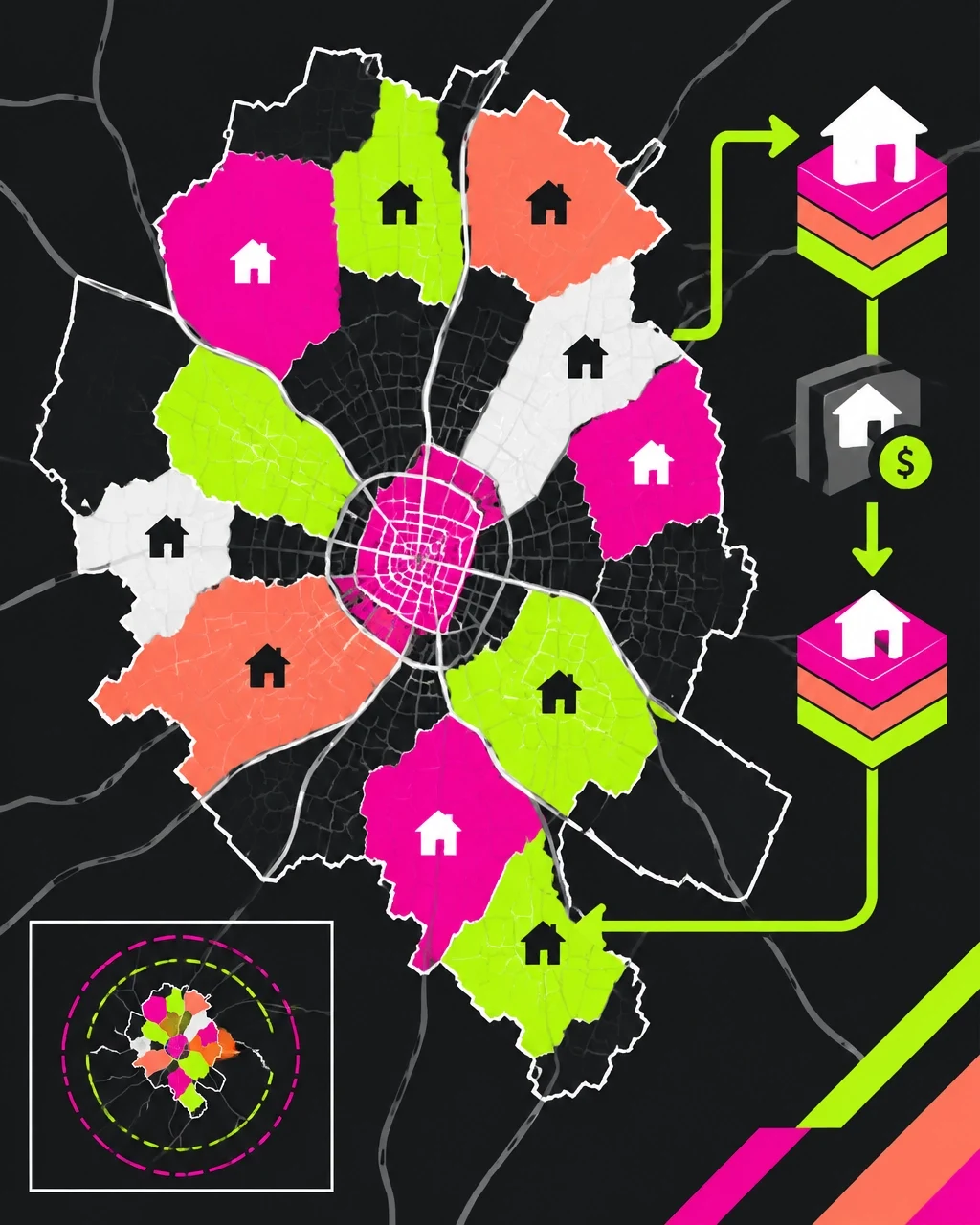
Maya also checks whether a property is inside the incorporated city limits of Atlanta. That matters because program eligibility can change from one neighborhood or block to the next.
For example:
- The Invest Atlanta Homebuyer Program may provide up to $20,000 for an eligible purchase inside the city limits. The program includes a 30-year fixed FHA, VA, or conventional first mortgage, a minimum FICO score of 620, a $1,500 borrower contribution, a $35,000 liquid-asset limit, and a maximum loan amount of $325,000.
- The Beltline Mortgage Assistance Program may provide up to $30,000 for qualified legacy residents and public-sector employees, or up to $20,000 for other qualified buyers, in specified Beltline TAD subareas.
- Georgia Dream may provide statewide assistance equal to 5% of the purchase price up to $10,000, or 6% up to $12,500 through the PEN tier, subject to program requirements.
Maya does not treat any of these amounts as guaranteed cash. She verifies income, credit, liquid assets, property location, loan limits, lien position, and occupancy requirements before structuring an offer.
Tips for Buying in Atlanta This Fall
1. Get pre-approved before shopping seriously
A pre-approval should reflect current income, debts, assets, and a realistic interest-rate assumption. Ask for a payment estimate that includes taxes, insurance, mortgage insurance, and HOA costs when applicable.
2. Separate list price from value
Atlanta’s median list price was $419,900 in August, while the Georgia MLS median sale price was $400,000. These are different measures, but together they show why buyers should compare asking prices with closed sales and current competition.
Do not assume a price cut automatically means a home is a bargain. Review condition, location, comparable sales, and likely repair costs.
3. Check city limits and program boundaries
Assistance eligibility may change block by block.
Use Invest Atlanta’s Check An Address tool to verify whether a property is inside the incorporated city limits. For Beltline assistance, confirm whether the property is within the eligible TAD subareas: 1, 2, 3, 8, 9, or 10.
4. Understand the assistance structure
These programs generally use deferred or forgivable second mortgages, also called soft seconds. They are not grants.
Repayment may be triggered by:
- Selling the home.
- Refinancing.
- Transferring ownership.
- Moving out.
- Failing to meet the required affordability or occupancy period.
Invest Atlanta’s standard program has a 10-year affordability period. The Beltline program uses a 15-year affordability period. Atlanta Housing’s eligible voucher-participant assistance may be forgiven after 10 years of maintaining the home as a primary residence.
Review the promissory note and lien terms before proceeding.
5. Compare all available programs
Atlanta Housing may provide up to $20,000 for standard eligible buyers, up to $25,000 for certain professionals or voucher participants, and up to $60,000 for eligible Housing Choice Voucher participants purchasing in the City of Atlanta.
The $60,000 option includes important requirements, including income at or below 80% of AMI, a purchase price capped at $375,000, a minimum credit score of 580, at least $500 in buyer contribution, liquid assets capped at $35,000, and an eight-hour HUD-approved homebuyer education course.
Review the Atlanta Housing Bridging the Gap program directly for current requirements.
Georgia Dream’s 2026 Metro Atlanta income limits are $130,290 for one- or two-person households and $149,833 for households of three or more. Peach Advantage may offer 2% to 5% of the first mortgage, or a 0% assistance option, at income limits up to 150% of AMI. Confirm current availability and rules through the Georgia Dream program.
6. Make the offer fit the market
A buyer-friendly market can support a measured offer, but the strongest strategy may involve terms rather than only price.
Depending on the property and seller’s priorities, consider:
- A closing-cost request.
- A permanent interest-rate buydown.
- A repair credit.
- A flexible closing date.
- A shorter inspection timeline when appropriate.
- A clear financing package that reduces uncertainty.
Your real estate agent and lender can help determine which combination best fits the home and your budget.
Bottom Line
Atlanta’s 2026 market gives prepared buyers room to compare, negotiate, and move with more confidence. The data shows slower sales, declining pending contracts, more active listings, 59 days on market, and price cuts on 25% of listings.
The late-September buying window may improve selection and negotiating conditions, but preparation matters more than any single week. Build a payment plan, verify assistance eligibility, confirm the property’s exact location, and understand whether any second mortgage could require repayment later.
