
Buying a home feels complicated for a reason: several independent companies must complete related tasks on different schedules. The lender is reviewing finances. The agent is managing negotiations. The insurance carrier is evaluating the property. The title or closing company is preparing legal documents. Inspectors and appraisers are working on separate timelines.
When no one sequences those steps, the buyer becomes the project manager.
That is the central lesson from recent buyer research. A national survey released by HomeServices of America in September 2026 found that 70% of recent homebuyers described the transaction process as a hassle, according to HousingWire. Among those buyers, 46% named uncoordinated service providers (including lenders, title companies, and insurance carriers) as the primary source of friction.
The smoother experience is not usually the result of luck. It comes from sequencing the work before small gaps become expensive problems.
Transaction Friction Audit
Check each item you have already completed. The audit will identify the most important gap still open and suggest the next action.
Check each item you have already completed. The audit will identify the most important gap still open and suggest the next action.
Your result will appear here.
What Changed
The homebuying process has become more coordinated in some ways and more fragmented in others. Digital applications can move information quickly, but speed does not automatically create ownership. A document may be uploaded in minutes while the buyer still does not know who is waiting on it, what happens next, or whether another deadline depends on it.
The HomeServices of America survey identified uncoordinated service providers as the leading source of transaction hassle for 46% of respondents. That is a larger problem than any single form or appointment. It means the buyer is often receiving instructions from multiple parties without one shared sequence.
The 2026 State of Homebuying Report from ServiceLink points to related stress points: 19% of buyers cited price negotiations, while 15% cited complex paperwork as their biggest stressors.
Mortgage rates can add pressure, but they are not the entire explanation. For context, Freddie Mac’s Primary Mortgage Market Survey reported that the average 30-year fixed mortgage rate was 7.03% for the week ending September 24, 2026. A buyer can be comfortable with the payment and still have a difficult transaction if the work is poorly sequenced.
The smoother 30% should not be treated as a group with a secret formula. Instead, their experience offers a practical planning model: answer major questions early, protect the deadlines that matter, and give every open item an owner.
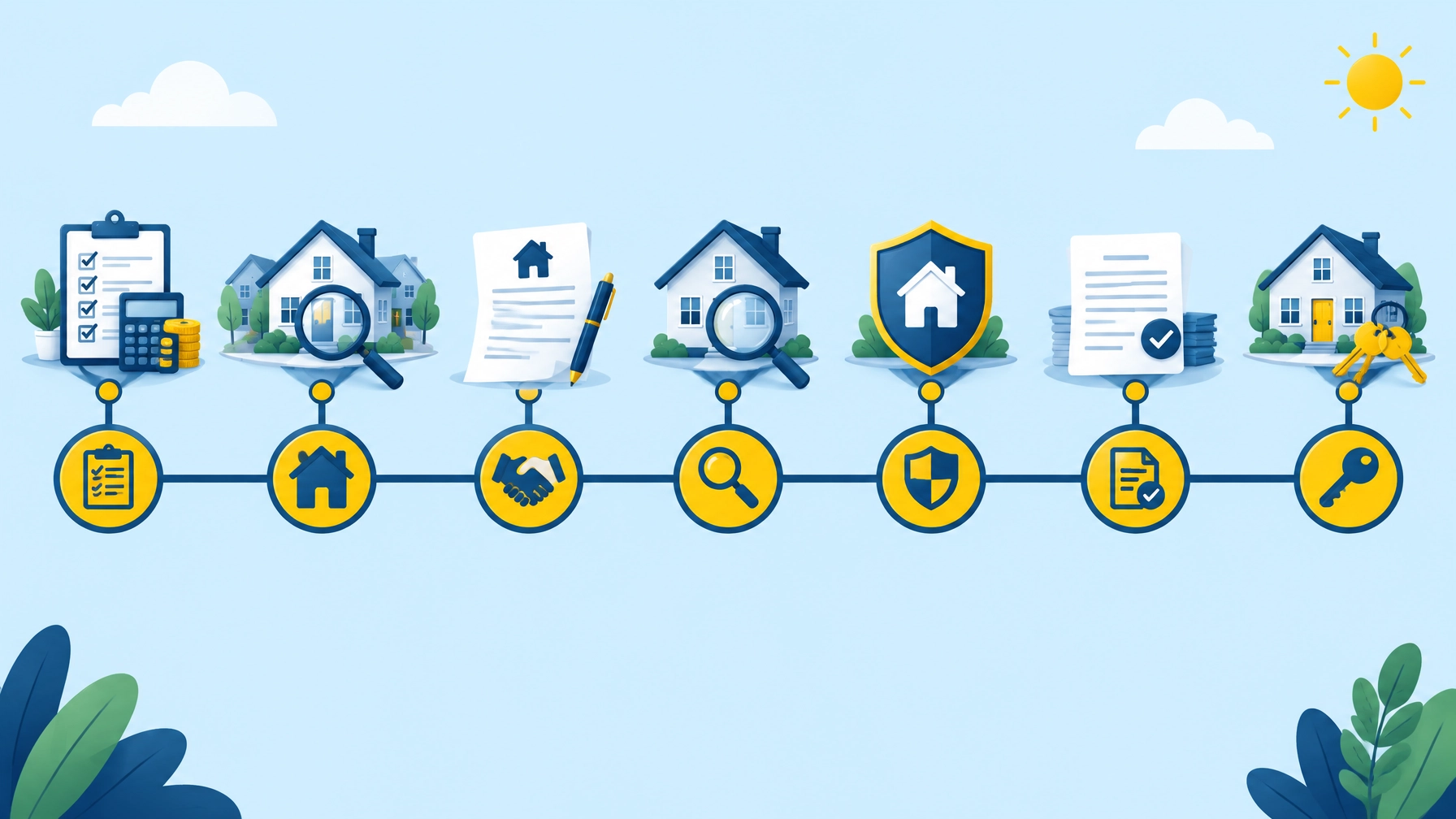
Why It Matters
Coordination failure produces real costs. A missed inspection deadline can reduce negotiating flexibility. A late insurance issue can delay lender approval. Condo documents requested too late may reveal reserve, litigation, or insurance concerns after the buyer has already spent time and money.
A delayed closing can lead to:
- A mortgage rate-lock extension fee.
- Additional storage, hotel, or temporary-housing costs.
- A second moving arrangement.
- A missed purchase of the next home.
- Seller frustration or a contract dispute.
- In serious cases, losing the home.
The roles of the real estate agent and loan officer matter here. They should not function only as order-takers who wait for the buyer to ask the next question. They should help coordinate the sequence, identify dependencies, and explain which items can run at the same time.
For example, the home inspection, insurance quotes, and title work may begin during the same general period, while the lender works through underwriting and the appraiser evaluates the property. The buyer does not need to manage every technical detail, but the buyer should know what is open, who owns it, and when it is due.
A coordinated process also preserves choice. Buyers often hear “waive” as if it means giving up every protection. It does not. A buyer may waive one contingency while keeping inspection rights, financing protections, or the ability to review property documents, depending on the contract and local practice. Understand the difference before signing.
Example Scenario
Consider Renee, buying in the Nashville area. The following figures are illustrations, not a prediction of any specific transaction.
The uncoordinated version
Renee’s offer is accepted with a closing date selected because it appears convenient on the calendar. No one maps the full timeline first.
- She shops for insurance during week three.
- Condo association documents are requested after the inspection period is nearly over.
- The lender is still waiting for a final asset statement while the appraisal is being completed.
- A property eligibility question appears after several other deadlines have passed.
The insurance carrier needs more information about the property. The condo documents require additional review. The lender cannot complete its final approval on the original schedule.
In this illustration, the closing moves back two weeks. Renee needs a rate-lock extension and pays a temporary housing and storage cost while waiting for the new date. Her first moving arrangement expires, so she schedules a second one.
The coordinated version
Renee uses the same basic purchase strategy but sequences the work differently.
Before serious shopping, she completes a full underwriting review. She builds the payment estimate using principal, interest, taxes, insurance, HOA dues, and a reserve for maintenance. Once the offer is accepted, the team maps the contract deadlines before choosing the practical closing schedule.
During the first week:
- Insurance quotes are requested.
- Condo documents are ordered.
- The inspection is scheduled.
- Flood-zone and insurability questions are checked.
- The lender receives the documents needed for underwriting.
- Each open item is assigned to a person with a due date.
The appraisal and title work proceed while the inspection findings are addressed. Renee keeps her employment, credit, and assets stable. The closing date is based on the time needed for underwriting, insurance, title, document review, and final funding.
In this illustration, the two-week delay is avoided. There is no rate-lock extension, and Renee schedules one move instead of two.
The difference is not that the second transaction has no issues. It is that the issues surface early enough to solve.

Tips
Use this checklist to reduce friction in your own homebuying process.
- Get fully underwritten before touring seriously. A pre-qualification may be based on limited information. A full underwriting review can identify income, asset, credit, or documentation questions earlier.
- Build the all-in monthly cost before setting a price ceiling. Include principal and interest, property taxes, homeowners insurance, HOA dues, mortgage insurance when applicable, and a realistic reserve for repairs.
- Order insurance quotes in the first week after acceptance. Do not wait until the final two weeks. Confirm that the property is insurable at a cost that fits the budget.
- Request association and property documents immediately. For a condo or planned community, ask for governing documents, budgets, assessments, insurance information, and any required questionnaires as soon as the offer is accepted.
- Confirm flood-zone status and insurability early. A flood determination, roof condition, electrical issue, or other property factor can affect both coverage and financing.
- Keep income and assets unchanged during underwriting. Avoid new credit, large purchases, unexplained deposits, job changes, or major transfers without discussing them first.
- Ask what the closing date is based on. Do not accept a default date simply because it is written into a template. Ask whether it accounts for underwriting, inspection, insurance, appraisal, title, notice, and funding requirements.
- Keep a written list of open items. Assign an owner and date to every item. “Someone is handling it” is not a useful status.
- Preserve inspection and appraisal protections where they matter. Competitive terms should still fit the property, budget, and risk tolerance. Understand precisely what is being waived and what remains available.
- Set one communication rhythm. A short weekly status update can prevent separate parties from working from outdated assumptions. Ask what changed, what is blocked, and what must happen next.
For a personalized review of your timeline and documentation, Talk to the Expert. The goal is not to eliminate every question. It is to surface the important ones while there is still time to act.
Bottom Line
The homebuying process becomes less stressful when you stop treating it as a series of isolated tasks and start treating it as a sequence.
Fully underwrite before shopping. Build the complete cost picture. Start insurance and property reviews early. Keep your financial profile stable. Clarify your contingencies. Set the closing date from the actual timeline.
The smoother 30% are not necessarily better at predicting every problem. They create a process in which problems are found early, assigned clearly, and resolved before they become closing emergencies.
.friction-audit {
padding: 2.4rem;
border: 1px solid #d9dee7;
border-radius: .45rem;
line-height: 1.5;
box-shadow: 0 4px 14px rgba(0, 0, 0, 0.04);
margin: 4rem 0;
}
.friction-audit__intro {
font-weight: 800;
font-size: 1.9rem;
}
.friction-audit__list {
display: grid;
gap: 1.4rem;
margin: 2rem 0;
padding: 0;
list-style: none;
}
.friction-audit__item {
display: flex;
align-items: center;
gap: 1rem;
}
.friction-audit__label {
display: flex;
align-items: flex-start;
cursor: pointer;
width: 100%;
}
label.friction-audit__label br {
display: none;
}
.friction-audit input.friction-audit__checkbox {
appearance: none;
-webkit-appearance: none;
display: inline-block;
flex: 0 0 2rem;
width: 2rem;
height: 2rem;
margin: 0 1rem 0 0;
border: 2px solid #b8c1cc;
border-radius: 50%;
background: #d9dee7;
cursor: pointer;
vertical-align: middle;
}
.friction-audit input.friction-audit__checkbox:checked {
border-color: var(–colour-secondary);
background-color: var(–colour-secondary) !important;
background-image: url(“data:image/svg+xml;charset=utf-8,%3Csvg xmlns=’http://www.w3.org/2000/svg’ width=’24’ height=’19’ viewBox=’0 0 24 19′ fill=’none’%3E%3Cpath stroke=’%23fff’ stroke-width=’3′ d=’M22.772.636l-14 17’/%3E%3Cpath stroke=’%23fff’ stroke-width=’3′ d=’M9.4 16.8l-8-6’/%3E%3C/svg%3E”) !important;
background-position: center !important;
background-repeat: no-repeat !important;
background-size: 55% !important;
}
.friction-audit input.friction-audit__checkbox:checked + .friction-audit__text {
color: var(–colour-secondary);
font-weight: 800;
}
.friction-audit__checkbox {
height: 2rem;
cursor: pointer;
background: #d9dee7;
width: 2rem;
margin-right: 1rem;
border-radius: 100%;
}
.friction-audit__button {
font-weight: 800;
border-radius: .4rem;
padding: 1.5rem 2rem;
font-size: 1.55rem;
margin: 3rem 0;
text-align: center;
cursor: pointer;
color: #fff;
background: #1769aa;
border: 3px solid #1769aa;
display: block;
outline: none;
}
.friction-audit__button:hover {
border: 3px solid #12558a;
background: #12558a;
}
.friction-audit__result {
margin: 20px 0 0;
padding: 14px;
border-left: 4px solid #1769aa;
background: #f1f7fc;
color: #263238;
}
p#friction-result br {
display: none;
}
function runFrictionAudit() {
const audit = document.querySelector(‘.friction-audit’);
const checks = […audit.querySelectorAll(‘.friction-check’)];
const openGap = checks.find(check => !check.checked);
const result = audit.querySelector(‘#friction-result’);
result.textContent = openGap
? `Highest-risk gap: ${openGap.dataset.risk}. Next action: ${openGap.dataset.action}.`
: ‘No major sequencing gap is unchecked. Keep a written list of open items and confirm ownership and deadlines with your agent and lender.’;
result.hidden = false;
}
