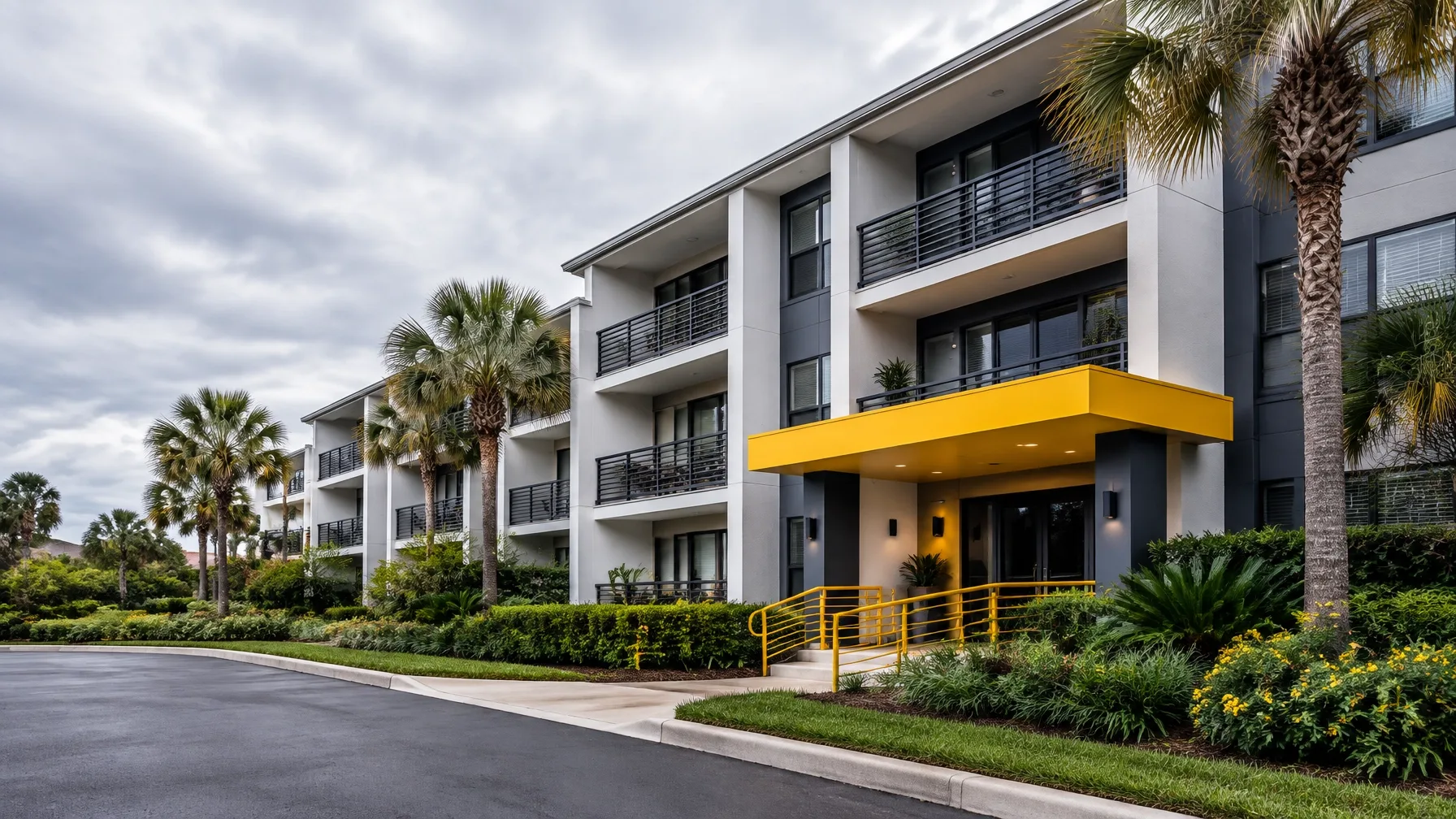
A condo buyer can have strong credit, verified income, plenty of assets, and a solid pre-approval, and still lose the loan because of the building.
That distinction matters more as the Southeast condo market moves toward two important deadlines. The limited-review process ended on August 3, 2026, and applications dated January 4, 2027, or later will face a higher replacement-reserve standard under Fannie Mae and Freddie Mac guidelines.
The change is especially important in Florida, where structural inspection, insurance, and reserve requirements are already reshaping older condo communities. Florida Realtors reported approximately 7.8 months of condo-townhouse supply in July 2026, compared with roughly 4.5 months for single-family homes. More available condo inventory means buyers have choices, but sellers also face more competition if their building is difficult to finance.
With the 30-year fixed mortgage averaging 7.03% for the week ending September 24, 2026, according to Freddie Mac’s Primary Mortgage Market Survey, financing eligibility matters more than ever. A unit that cannot qualify for conventional financing may have a much smaller buyer pool.
What Changed
Limited review ended August 3, 2026
The Fannie Mae Lender Letter LL-2026-03 retired the condo limited-review process for applicable loan applications dated on or after August 3, 2026.
In practical terms, nearly all conventional condo loans now require a full project review, unless the project qualifies for a specific waiver or another permitted exception.
A full review looks beyond the individual unit. It examines the condominium project as a whole, including:
- The association’s budget and reserve allocation
- The reserve study and recommended funding level
- Master property insurance coverage and deductibles
- Deferred maintenance and major repair concerns
- Pending or current litigation
- Owner-occupancy percentage
- Single-entity ownership concentration
- Commercial or mixed-use space
- The number of units that are delinquent on assessments
- Structural, engineering, or inspection reports
- Special assessments and planned capital projects
The buyer may be financially qualified, but the project must also meet the lender’s property standards.
The reserve requirement rises to 15% in January
For loan applications dated on or after January 4, 2027, Fannie Mae and Freddie Mac require the association to allocate at least 15% of annual budgeted assessment income to replacement reserves. The previous minimum was 10%.
This is not the same as the association having 15% of its total budget sitting in a bank account. The issue is how the annual assessment income is allocated toward future capital repairs, replacement projects, and deferred maintenance.
An association that relies on a reserve study may use that study to justify a different funding level. However, the budget must include the highest recommended allocation from the study. The baseline funding method is not permitted under the updated requirements. These reserve-study requirements have been in effect since August 3, 2026.

One small-project waiver remains available
Projects with 10 or fewer units may qualify for a Waiver of Project Review. That does not mean every small project automatically qualifies. The lender still must verify the project meets the applicable waiver conditions, and some lenders apply requirements beyond the agency minimums.
The key point: do not assume a small building is exempt. Ask the lender to confirm the project’s eligibility in writing.
Florida adds another layer
Florida’s structural reserve, milestone inspection, and insurance requirements create an additional review layer for many condominium associations.
A building missing required inspections, structural reserve documentation, or required repair work may be classified as non-warrantable. That designation can remove conventional financing from the transaction.
The Florida Realtors market data shows why this matters to sellers. Condo inventory is already higher than single-family inventory. A unit in a building with incomplete documents or unresolved structural issues may sit while comparable units in compliant projects continue to close.
| Change | Effective date | What it means | Who it affects |
|---|---|---|---|
| End of limited review | August 3, 2026 | Nearly all conventional condo loans now require a full project review unless an approved waiver or exception applies. | Buyers, sellers, agents, associations, and lenders |
| 15% replacement reserve requirement | January 4, 2027 | Associations generally must allocate at least 15% of annual budgeted assessment income to replacement reserves for eligible agency financing. | Condo associations and buyers using conventional financing |
| Reserve-study highest-recommendation requirement | August 3, 2026 | If a reserve study is used, the budget must fund its highest recommended allocation. Baseline funding is prohibited. | Associations relying on reserve studies |
| 10-or-fewer-unit waiver | Available under applicable guidelines | Some small projects may qualify for a Waiver of Project Review, subject to lender and agency requirements. | Small condominium projects and their buyers |
| Florida structural reserve and milestone inspection requirements (state-specific) | Phasing in under Florida law | Missing inspections, structural reserve work, or required documentation can make a project non-warrantable. | Florida condo owners, buyers, sellers, and associations |
This is not primarily a rate question. It is an eligibility question.
A buyer may be fully approved based on income, credit, employment, and assets. The loan can still fail because the building does not meet project standards. That failure may happen late if the association documents are requested only after the offer is accepted.
If a project is non-warrantable, conventional financing may fall away. The buyer may then need:
- A portfolio loan held by the lender instead of sold to Fannie Mae or Freddie Mac
- A specialized non-QM condo loan
- A larger down payment
- Higher reserves or stronger credit
- A higher interest rate
- Cash
Those alternatives may keep the transaction possible, but they change the buyer’s payment, cash requirements, and timeline.
They also change the seller’s market. A non-warrantable condo has fewer eligible buyers. That can mean longer days on market, more renegotiation, lower offers, or a larger discount compared with a similar unit in a compliant building.
For sellers, condo financing eligibility is a resale issue, not just a buyer issue. Pull the association’s documents before listing. Do not wait until an offer arrives to discover that the budget, insurance policy, inspection records, or reserve study is incomplete.
For buyers and agents, resolve the project question before the inspection or financing contingency period ends. A clean buyer file cannot overcome a project that fails the lender’s collateral requirements.

Request these documents early
The buyer or agent should request:
- Current association budget
- Reserve allocation percentage
- Current reserve study
- Evidence that the budget follows the reserve study’s highest recommendation
- Master insurance policy
- Master policy deductible
- Confirmation of whether the unit owner needs supplemental coverage
- Completed HOA or lender questionnaire
- Litigation disclosure
- Minutes from recent board meetings
- Special assessment notices
- Milestone inspection report, when applicable
- Structural reserve reports and repair plans, when applicable
The lender should review these documents as part of the project analysis. The buyer’s personal approval is only one part of the decision.
Example Scenario
Priya is buying a two-bedroom condo in the Tampa area. Her credit, income, and assets support the purchase, and she receives a conventional pre-approval.
Before removing her financing contingency, she asks for the association’s current budget, reserve study, master insurance policy, HOA questionnaire, recent board minutes, and structural inspection records.
The documents reveal two concerns:
- The association’s reserve allocation is below the new 15% threshold for applications dated January 4, 2027, or later.
- The master insurance policy has a high deductible, raising questions about the association’s coverage and whether Priya will need a supplemental policy.
Priya’s approval is not the problem. The project is.
Her options are:
- Choose a different condo project with stronger reserves and clearer insurance documentation
- Ask whether a portfolio or specialized non-warrantable condo loan is available
- Renegotiate the purchase price or terms to reflect the additional financing cost and risk
- Continue only after confirming that the intended loan program accepts the project
Priya ultimately decides that the alternative project provides a clearer conventional-financing path. She also changes her process: next time, she will request the association documents before writing the offer.
The seller-side lesson is equally important. A condo listing in St. Petersburg sat longer than expected because the association could not quickly provide complete reserve and insurance documents. Interested buyers were qualified, but their lenders could not finish the project review. The issue was not the unit’s condition. It was the building’s documentation.
Tips
Use these steps to reduce financing surprises.
- Request association documents before writing the offer. Ask for the budget, reserve study, insurance information, questionnaire, minutes, litigation disclosures, and inspection reports.
- Confirm the reserve allocation percentage in writing. Do not rely on a verbal statement that the association is “well funded.”
- Ask for the reserve study and its highest recommended allocation. A study is not enough by itself. Confirm the budget follows the highest recommendation.
- Review the master policy deductible. Ask whether the buyer must carry supplemental unit-owner coverage or additional loss-assessment protection.
- Ask about pending litigation and special assessments. Open claims, construction defects, unpaid assessments, and planned capital projects can affect eligibility.
- Check owner occupancy and single-entity concentration. A high percentage of investor-owned units or one owner controlling too many units may create review issues.
- Confirm required inspections and structural reserve work. This is especially important in Florida, where milestone inspections and structural reserve requirements can affect warrantability.
- Verify the project’s eligibility for the intended loan program before removing contingencies. A conventional pre-approval does not automatically approve every condo.
- Ask whether the lender applies overlays. Some lenders impose standards stricter than the agency minimums.
- Treat financing eligibility as a resale issue. Sellers should preserve complete, current project documentation because the next buyer’s lender will need it.
If you are reviewing a condo purchase and want to understand the document timeline, Get Mortgage Ready before making the financing contingency deadline a guess.
Bottom Line
The condo financing process changed on August 3, 2026, and the next major deadline arrives January 4, 2027.
Limited review is gone for most conventional condo transactions. Full project review now examines the association’s finances, reserves, insurance, maintenance, ownership structure, litigation, and documentation. The 15% replacement-reserve requirement will add another test for applications dated on or after January 4, 2027.
Buyers should review the building before the inspection period ends. Sellers should organize the documents before listing. Agents should ask the project questions early, because a buyer can qualify financially and still fail because of the condominium association.
The strongest position is simple: know whether the building is financeable before the contract depends on it. For a project-specific review, Talk to the Expert.
