“Is now a good time to refinance?” sounds like a market-timing question. In 2026, it is usually the wrong one.
Ask this instead:
What is my refinance break-even point, and will I still have this loan when I reach it?
That question matters because refinance activity has fallen sharply. Refinance applications were down roughly 65% year over year by mid-September as mortgage rates hovered near 7%, according to MBA News and Research. The average 30-year fixed mortgage rate reached 7.03% for the week ending September 24, 2026-the fifth consecutive weekly increase and the first reading above 7% since early 2025, according to Freddie Mac’s Primary Mortgage Market Survey.
Most homeowners do not benefit from replacing a low-rate mortgage with another loan near 7%. But the eligible group is not zero. The right calculation can identify whether refinancing lowers your long-term cost, solves a loan-structure problem, or simply creates a new payment with fresh closing costs.
What Changed
The rate environment changed, but the basic refinance decision did not. Closing costs still have to be recovered before a new loan creates a financial benefit.
The standard calculation is simple:
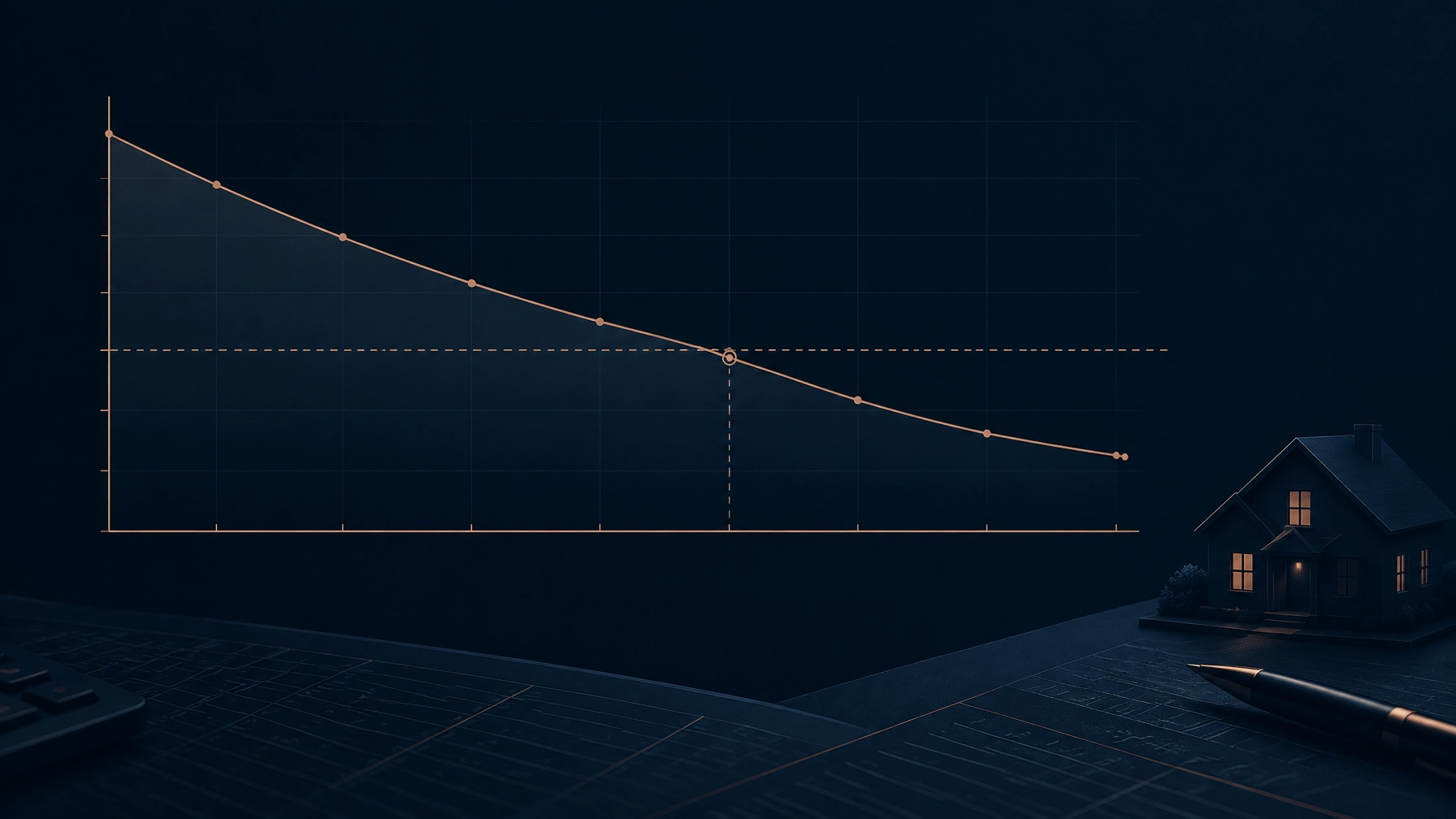
Total closing costs ÷ monthly payment savings = break-even months
For example, assume:
- Closing costs: $9,000
- Monthly principal-and-interest savings: $250
The calculation is:
$9,000 ÷ $250 = 36 months
You would reach break-even after three years. If you sell, refinance again, or pay off the loan before then, the savings may never recover the upfront cost.
Closing costs commonly run between 2% and 5% of the loan amount. They may include lender fees, title work, appraisal charges, recording costs, prepaid interest, and other settlement expenses. Ask for a complete estimate rather than focusing only on the advertised interest rate.
The Federal Reserve also raised its target range to 3.75%-4.00% on September 16, 2026. That change affected variable-rate products quickly. HELOCs often reprice as market benchmarks move, while an existing fixed-rate mortgage does not change. HousingWire’s latest mortgage coverage provides useful context for watching those rate movements.
Why It Matters
A rate-and-term refinance generally does not work for someone with a fixed mortgage below 5%. Replacing a 4.25% loan with a new loan near 7% would raise the cost of the debt.
Still, five situations can make a refinance worth reviewing:
-
Your current rate is well above the market.
- A borrower paying roughly 7.5% or higher may have enough potential savings to justify the costs, especially if the new loan reduces the rate by a meaningful margin.
-
You can remove mortgage insurance.
- If your home value has increased or your principal balance has declined, your loan-to-value ratio may now qualify for PMI removal. First ask whether the insurance can be removed without refinancing.
-
Your adjustable-rate mortgage is approaching a reset.
- Converting from an adjustable rate to a fixed rate can create payment certainty before the first reset, even if the new fixed rate is not dramatically lower.
-
You have a specific, planned reason to take cash out.
- A cash-out refinance can fund a necessary renovation, pay off higher-cost debt, or address another defined need. The tradeoff is significant: it replaces the entire first mortgage.
-
You need to change the payment profile.
- A shorter term, a different loan structure, or a recast may better match your financial plan. Lowering the payment is not the only possible goal, but the new structure must be evaluated against total interest and cash flow.
A cash-out refinance is often the wrong tool when the existing first mortgage is excellent. If you have a 4% first mortgage and replace it with a 7% loan to access equity, the cash may feel inexpensive only because the comparison ignores the higher cost of the entire balance.
Before replacing the first mortgage, compare:
- A HELOC or fixed-rate home equity loan
- A loan modification or recast, where available
- Additional principal payments if the goal is reducing interest
- Waiting until the numbers improve
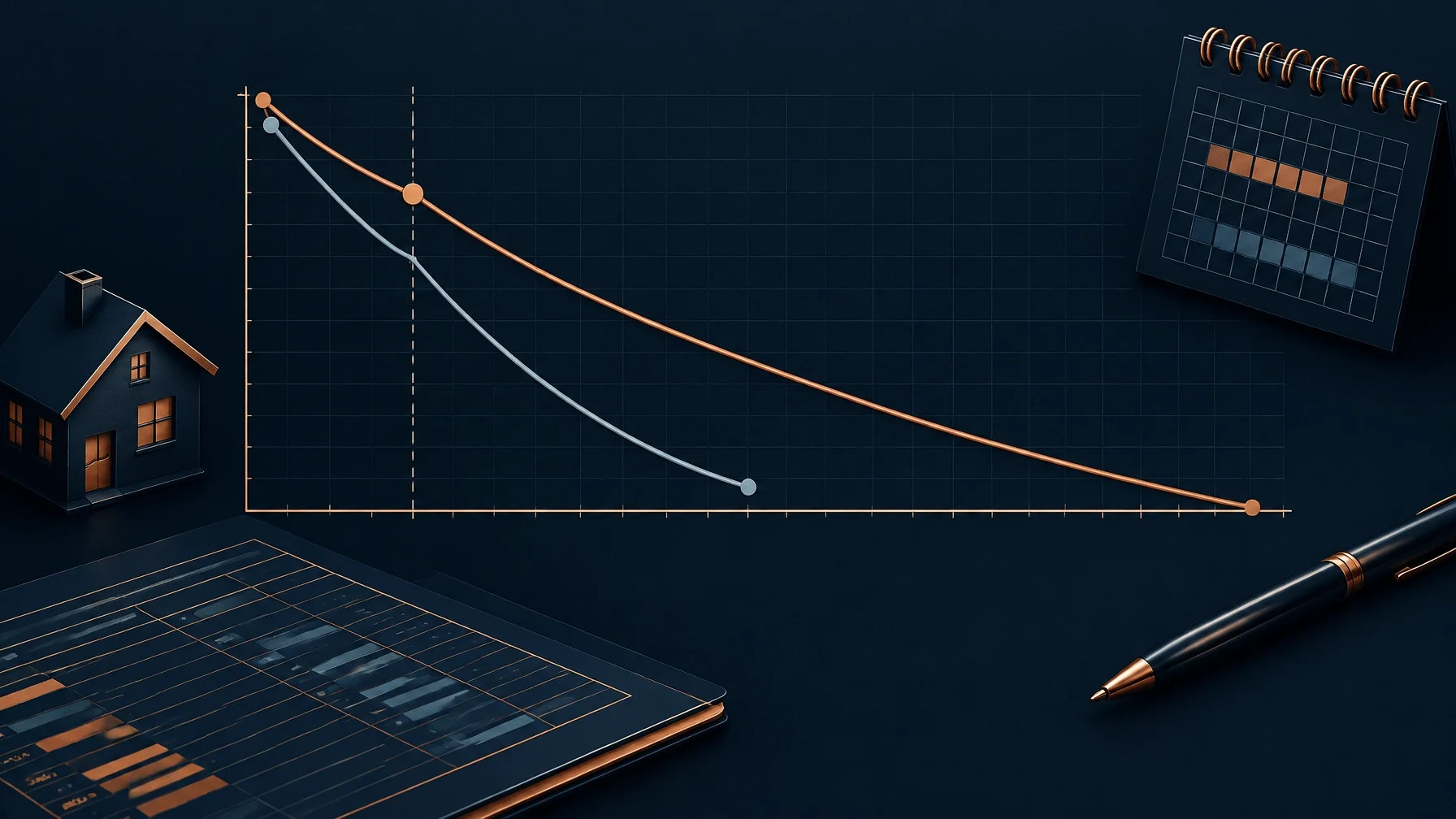
The payment-drop comparison can also mislead you because refinancing restarts the amortization clock. A new 30-year loan may produce a lower payment than the remaining 22 or 25 years on your current mortgage, but it may keep you in debt longer and shift more of the early payments toward interest.
Example Scenario
Elena, a homeowner in the Raleigh area, bought two years ago with an illustrative $350,000 balance at 7.5%. Assume she has 28 years remaining and receives a refinance estimate with $10,000 in closing costs.
These figures are illustrations, not a quote.
Scenario one: hypothetical 7.0% refinance
- Current payment: approximately $2,494 per month
- New 30-year payment: approximately $2,328 per month
- Monthly savings: approximately $166
- Break-even: $10,000 ÷ $166 = approximately 60 months
Elena would need to keep the new loan for about five years just to recover the closing costs through payment savings. If she expects to move in three years, the refinance likely does not work on this test.
Scenario two: hypothetical 6.5% refinance
- Current payment: approximately $2,494 per month
- New 30-year payment: approximately $2,212 per month
- Monthly savings: approximately $282
- Break-even: $10,000 ÷ $282 = approximately 36 months
The second scenario is more compelling, but only if Elena expects to stay beyond the 36-month break-even point. She should also compare the interest paid over her expected holding period, not just the payment. The new loan restarts a 30-year schedule, so a lower payment does not automatically mean lower lifetime cost.
Now consider a shorter example. Suppose another homeowner has a $300,000 first mortgage at an illustrative 4.25% rate and is offered a 7% cash-out refinance. Even if the homeowner receives $50,000 in cash, the new loan replaces the entire $300,000 first mortgage plus the additional funds. The payment and long-term interest cost can rise substantially. A HELOC or fixed-rate equity loan may preserve the valuable 4.25% first mortgage while limiting the higher-rate borrowing to the amount actually needed.

Tips
Use these steps before deciding:
- Calculate the break-even before calling anyone. Start with your balance, rate, estimated costs, and realistic holding period.
- Compare closing costs as a percentage of the loan amount. A 3% cost on a $300,000 balance is materially different from a 3% cost on a $700,000 balance.
- Check whether PMI can be removed without a full refinance. Contact your servicer and review the loan’s cancellation rules first.
- Note your ARM reset date. Review the index, margin, caps, and projected payment before deciding whether a fixed-rate refinance is worthwhile.
- Compare a HELOC or home equity loan before replacing the first mortgage. This is especially important when your current first-lien rate is below today’s market.
- Remember that refinancing restarts the amortization clock. Ask for an amortization comparison, not just a payment comparison.
- Ask whether a lower-cost lender-credit option makes sense. A slightly higher rate may reduce upfront costs and improve the break-even period. Compare the total cost over your expected time in the loan.
- Decide based on how long you will actually stay. A refinance that works over seven years may fail over two years.
- Review improved credit and equity. A stronger credit profile, lower loan-to-value ratio, or better property value may improve pricing or remove mortgage insurance.
- Use a specific goal. Rate reduction, payment stability, debt consolidation, renovation, or term reduction should each be evaluated separately.
If you want help organizing the numbers, Talk to the Expert before treating a headline rate as a decision.
Bottom Line
The 7% refinance question is not whether rates are “good” or “bad.” It is whether the new loan solves a real problem before its costs are recovered.
A refinance may be worth reviewing when your current rate is around 7.5% or higher, your credit or equity has improved, your ARM is approaching a reset, or PMI can be removed. It may also make sense for a carefully planned cash-out need, but only after comparing the cost of replacing the entire first mortgage with a second-lien option.
For many homeowners with sub-5% fixed loans, waiting is the financially stronger choice. For everyone else, calculate the refinance break-even, examine the amortization clock, compare alternatives, and make the decision based on how long you expect to keep the loan.